






Le Canvas Atelier
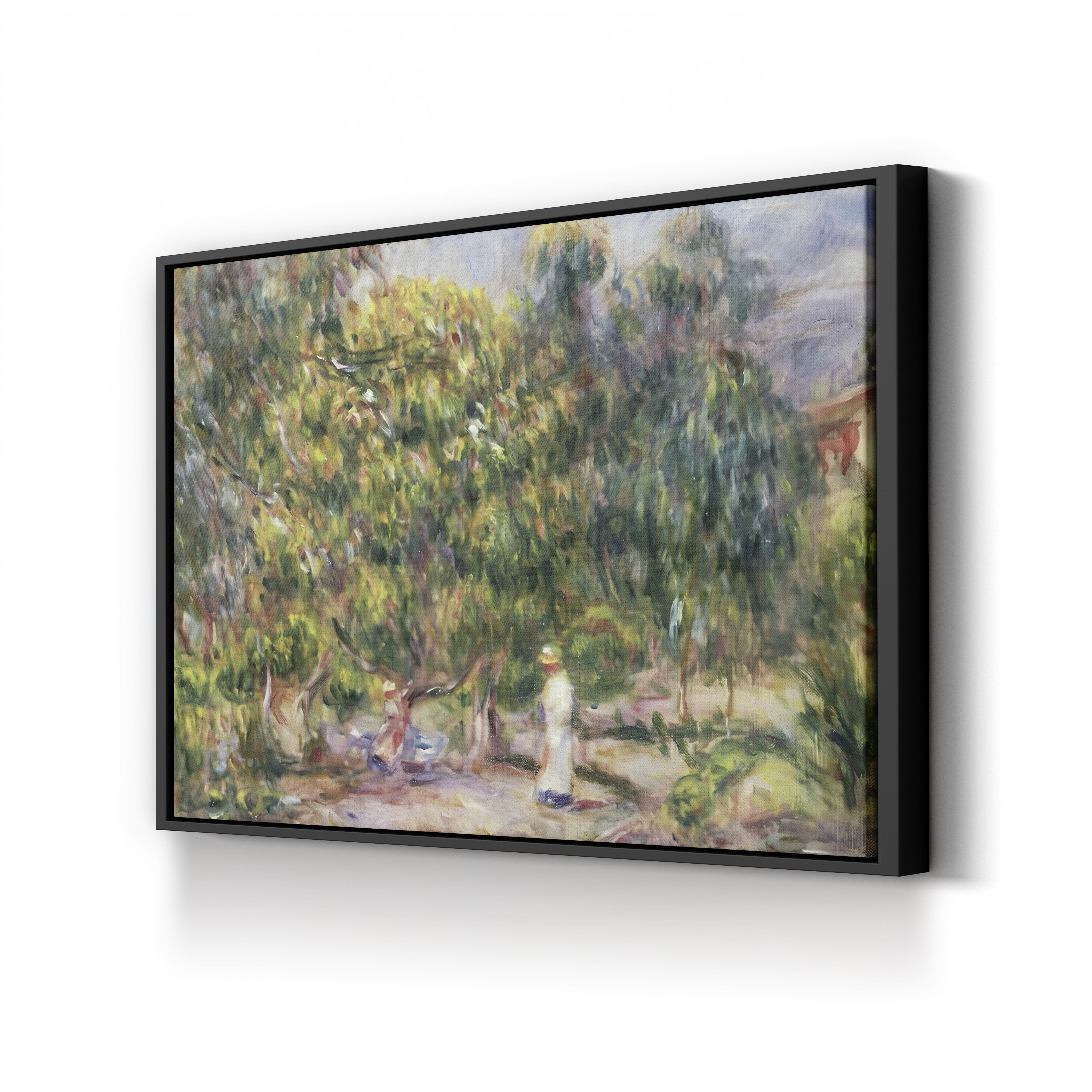
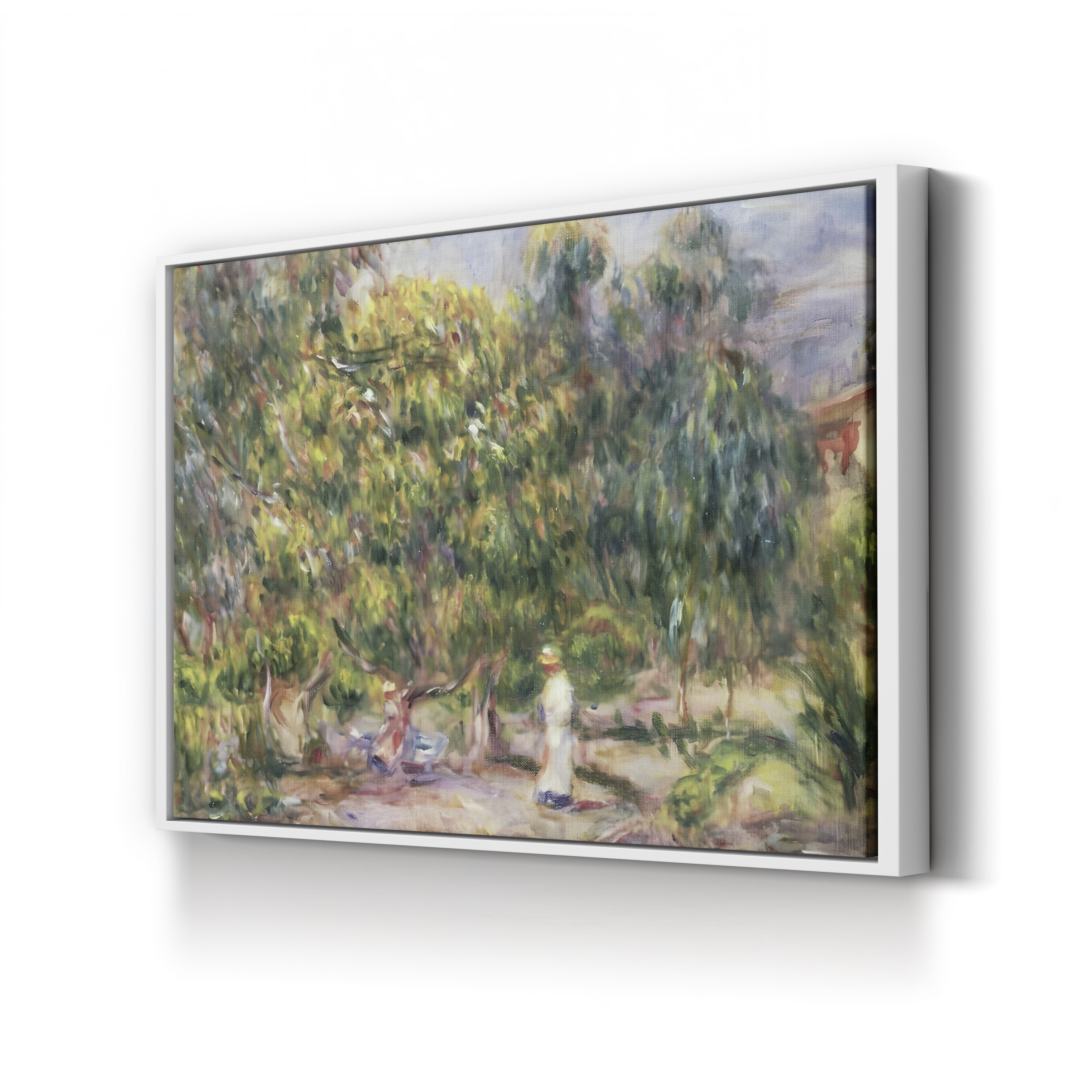
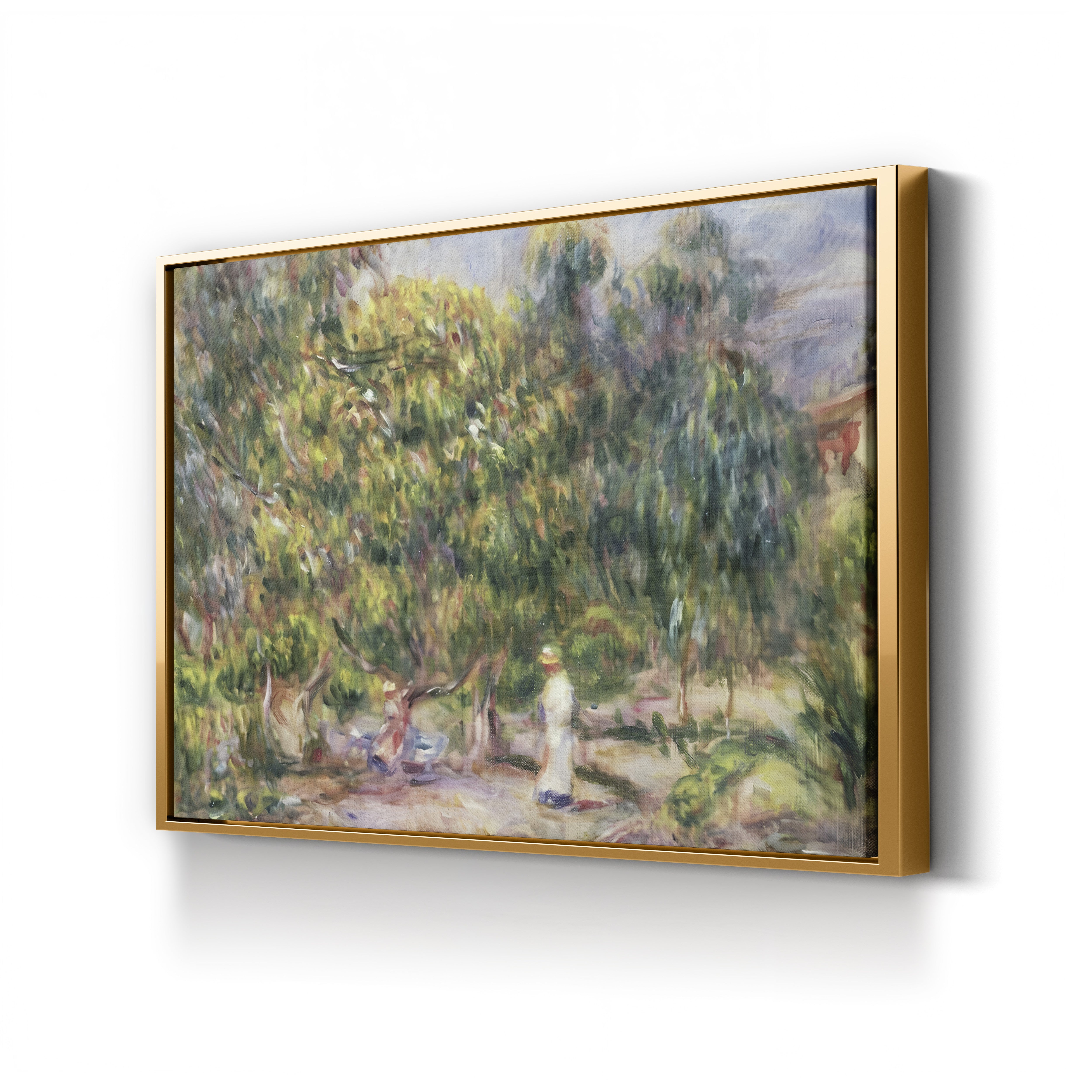
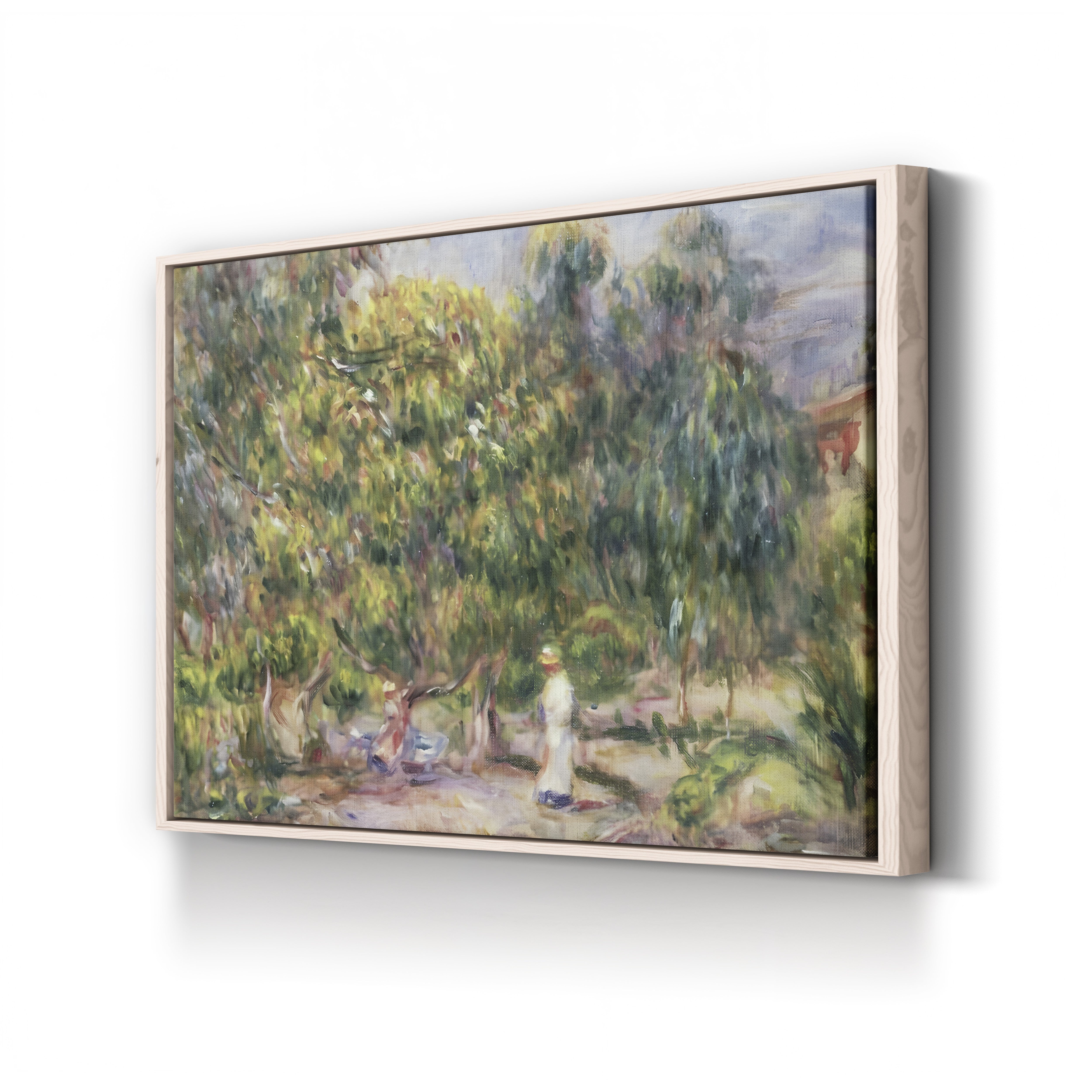
The Woman in White in the Garden of Les Collettes (La Femme en Blanc dans le Jardin des Collettes), 1915 by Pierre-Auguste Renoir
Choose options
The Woman in White in the Garden of Les Collettes, painted by Pierre-Auguste Renoir in 1915, depicts a solitary figure in a flowing white dress walking a sunlit path beneath the dense olive and fig canopy of Renoir's beloved Cagnes-sur-Mer estate, a second seated figure glimpsed at the left amid baskets and dappled shade. Rendered in loose, molten strokes of gold-green foliage and warm ochre earth, the composition captures the free, almost dissolving brushwork of Renoir's final years, when arthritis forced him to paint with brushes strapped to his crippled hands. Les Collettes, with its ancient olive grove and Mediterranean light, became the aging master's last and most cherished subject.
Artist: Pierre-Auguste Renoir (French, 1841-1919). Date: 1915.
The Woman in White in the Garden of Les Collettes (La Femme en Blanc dans le Jardin des Collettes), 1915 by Pierre-Auguste Renoir. Late-Period Impressionist Wall Art Canvas Print.