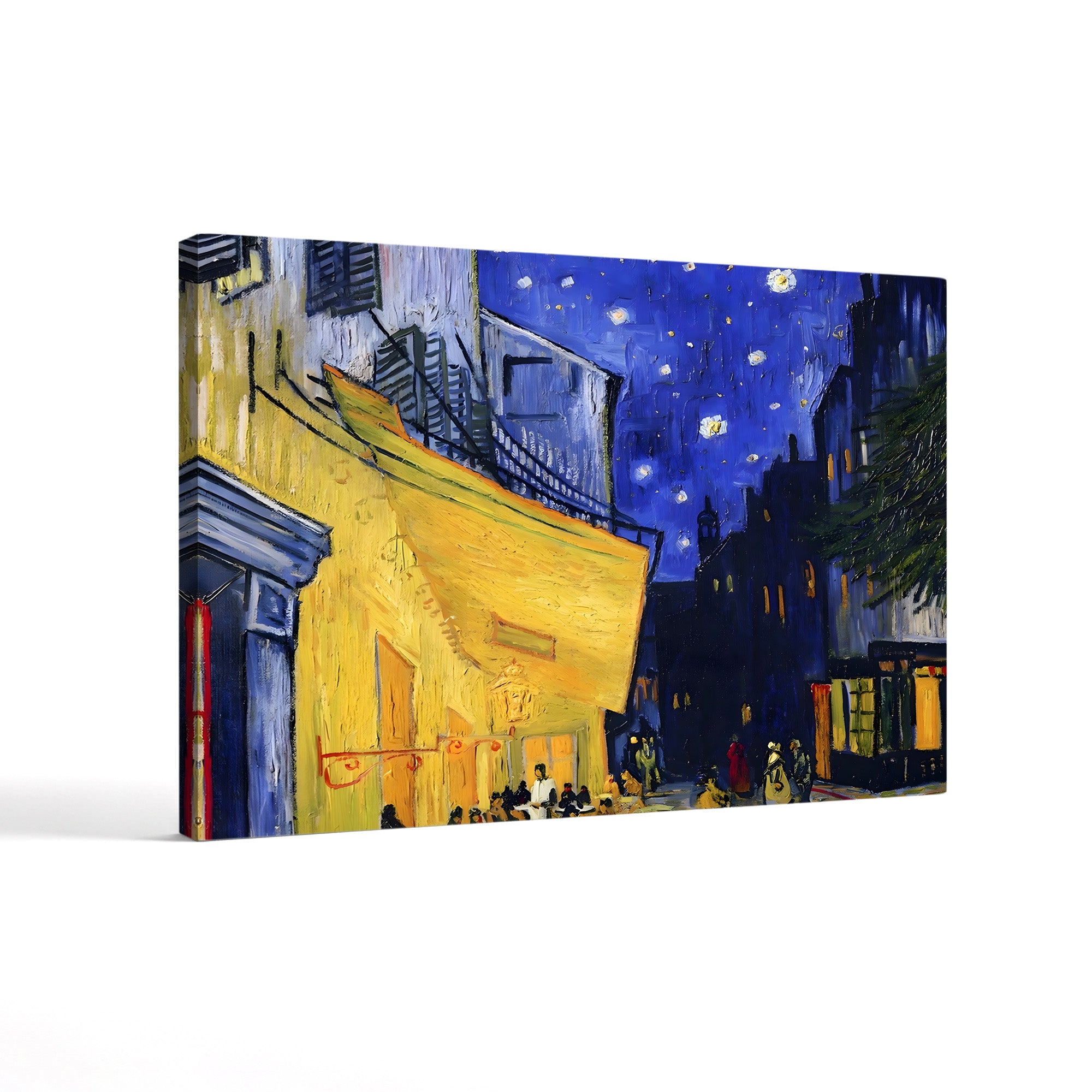
Detail of Café Terrace, Place du Forum, Arles – Vincent van Gogh Wall Art | Post-Impressionist Nocturne Canvas Print

Le Canvas Atelier

Detail of Café Terrace, Place du Forum, Arles – Vincent van Gogh Wall Art | Post-Impressionist Nocturne Canvas Print

Sale price$39.99 USD Regular price$99.98 USD
Save 60%
Size:12x9"
Frame Style:Standard 0.75"

A detail from one of the most beloved of all Van Gogh's paintings, this close view of Café Terrace at Night (1888) captures the warmly glowing terrace of the Café de la Gare on the Place du Forum in Arles at night, the golden lamplight flooding the cobbled terrace and contrasting with the deep blue star-studded sky in a composition of unforgettable visual drama. Painted in September 1888, the work is celebrated for being one of the first nocturnal paintings Van Gogh created using colour rather than dark tones to convey the night, a radical and enduring innovation. The detail format allows intimate engagement with the painting's extraordinary richness of colour and surface. Now held at the Kröller-Müller Museum, Otterlo, it remains one of the supreme achievements of Post-Impressionism.